By the previously mentioned line-up analogy, Gravecrusher had similarly sudden and unexpected appearance like Coffinborn. High quality death metal, a debut EP released by Xtreem Music, and fortunately their music also had their distinguishable character.
If Coffinborn was more on the old school path, Gravecrusher pushed it further by focusing more on thrashing basics. If Coffinborn's debut sounded dirty and putrid, compared to that Gravecrusher sounds pretty clear. The songs are focusing on the core essence of old school death, therefore they're not only simpler, but shorter as well. Instead of oppressing heaviness, thrashing intensity and fast, noisy, short solo themes forming the main impression. Two same rooted and therefore strongly related, but still quite different perspectives and qualities. Both are quite enjoyable in their own way. This could serve as a great example how and why the importance of seemingly tiny or secondary features, such as sound, atmosphere and distortion rate became so determining since the late '00s. A different sound could mean a different world, and even if the possibilities in themes are limited and exhausted, by sound they seem limitless. Thanks to its more traditional approach, "Morbid Black Oath" is easier to go into, and could be a potential favorite for both the fans of thrash and death metal.
Showing posts with label Hungary. Show all posts
Thursday, April 30, 2026
Tuesday, April 28, 2026
Coffinborn - Beneath the Cemetery (2014)
Coffinborn debuted with a pretty stunning EP. Considering that it's a Hungarian band playing high quality death metal and seemingly showed up from nothing by an Xtreem Music release, it doesn't seem like an everydays event. The imagination that a tiny, normally forgettable metal scene like this is about to go through a very promising metamorphosis, might serve as a reason for enthusiasm for the local fans of the genre, but the reality is a bit simpler.
The band is bonded to two musicians who are originally from the city of Szeged, Hungary (Lambert Lédeczy - drums, and Tibor Hanyi - guitars, vocals) and who also played in Tyrant Goatgaldrakona. One of them or both of them also played in a few other impressive death metal bands located in the same area, such as Gravecrusher, Rothadás, Cryptworm, not to mention some black metal bands (Fagyhamu, Ahriman) or bands that no information could be found about, but the analogy seems clear (Tomb Portal). Some of them will be mentioned in details in the future. Unlike in the case of side projects, Coffinborn isn't the same like the member's previous death metal band. It could be easily distinguished from Tyrant Goatgaldrakona by its more old school, thrash influenced touch. The song structures are simpler, the basic essence of the old school aspect of the genre is in focus. Thrashing intensity, short, fast solos, putrid sound and down pulling filth. Nothing extraordinarily new, but quite a novelty in its local scene, and enjoyably refreshing compared to the actual trends in the main metal scene. The only evident analogy with Tyrant Goatgaldrakona is the great quality and production that also rarely could be heard in this region.
Old school death metal at its best, a potential favorite for the fans of the genre!
The band is bonded to two musicians who are originally from the city of Szeged, Hungary (Lambert Lédeczy - drums, and Tibor Hanyi - guitars, vocals) and who also played in Tyrant Goatgaldrakona. One of them or both of them also played in a few other impressive death metal bands located in the same area, such as Gravecrusher, Rothadás, Cryptworm, not to mention some black metal bands (Fagyhamu, Ahriman) or bands that no information could be found about, but the analogy seems clear (Tomb Portal). Some of them will be mentioned in details in the future. Unlike in the case of side projects, Coffinborn isn't the same like the member's previous death metal band. It could be easily distinguished from Tyrant Goatgaldrakona by its more old school, thrash influenced touch. The song structures are simpler, the basic essence of the old school aspect of the genre is in focus. Thrashing intensity, short, fast solos, putrid sound and down pulling filth. Nothing extraordinarily new, but quite a novelty in its local scene, and enjoyably refreshing compared to the actual trends in the main metal scene. The only evident analogy with Tyrant Goatgaldrakona is the great quality and production that also rarely could be heard in this region.
Old school death metal at its best, a potential favorite for the fans of the genre!
Krampüs - Graveyard Blowjob (2014)
Grindcore or death/grind isn't the most usual style to encounter in the small Hungarian extreme metal scene, therefore Krampüs was able to gain attention instantly by their first full-length album, "Mental Holocaust". Decent, primitive and enjoyable death/grind, that's easy to go into.
By their return with "Graveyard Blowjob" they continued the same grossness and violence based path spiced with some sexual aberrations and perversions, but this time with way better sound quality than before. It's not the most usual sound if it's about grindcore, more like modern brutal death metal related, but it turned out to be an advantageous step, cause the noisier, lower toned sound instantly highlighted the heaviness of their music. Therefore "Graveyard Blowjob" hits way harder than the first album did by its dull sound, that kinda took from the impression of the music's intensity. Krampüs had a strong old school touch since the beginning, and they preferred to rely on the contrast of thrashing tempo and frequent slow downs. Actual grinding is way less common than how it should be expected. The brutal death tone can compense that, and by the primitive approach during the short songs lengths it works just fine. But this way grinding became like some very special gift that a death/grind band is willing to offer only occasionally.
Monday, April 20, 2026
Lepra - Tongue of Devil Prayers (2014)
Since the late '90s/early '00s black metal became evidently the most popular extreme subgenre in Hungary. This might not be surprising, since the style earned pretty wide attention internationally too meanwhile, but in Hungary compared to other extreme styles, the number of black metal bands also giving the absolute majority since then. But unfortunately, the impressive number of bands didn't have stimulating effect on the quality of the music in its local scene, therefore black metal earned an overrated status in Hungary.
Lepra's debut could be sorted to the rare gems in this small scene, despite quite evident rip-offs could be discovered on the album. That's also very typical about nearly the whole metal scene in Hungary, but Lepra did manage to give some less usual, genuine features and perspective to their strongly Burzum influenced themes. At one hand deep under the blackened mass, the album has a quite old school, thrash influenced tone, that fortunately didn't come from the limited capabilities of the musicians as usual. And this time-to time revealing ancient feeling ended up as some redefining effect, that turned the album pretty enjoyable. By the vocal style they also refused to follow the ordinary path, cause it's like half way between whispering and suffocating. In total what could be heard on "Tongue of Devil Prayers" is enough old school and tradition following, but includes elements that could be weird for those, who aren't into any kind of experimenting in the style; and very exciting for those who are able to embrace a little bit of weirdness, that isn't exactly the same old weird stuff. The album could easily catch and lead the listener by its simple and very familiar themes. The role of the atmosphere and the themes are balanced, and sound quality is also great. Unlike many fellow black metal bands, Lepra did create something easily distinguishable and outstanding, that made it worth to pay attention to this small scene.
Tuesday, December 16, 2025
Apey and the Pea - Devil's Nectar (2013)
Apey and the Pea was formed in 2008 by the members of a former Pantera tribute band, and after several years of path finding experiments into an audience friendlier teen rock direction, their first full-length debut "Devil's Nectar" was released, that took a more mixed and harsher way.
There are some analogies though between "The Day Ends" EP and "Devil's Nectar". Both records starting softer, with songs that having almost radio compatible touch, and first only the evident Pantera influences showing up frequently. Later the themes turning noisier, slower and the band introduces their heavier side. But while "The Day Ends" was a kinda simpler, bipolar EP, "Devil's Nectar" was like a mashup of at least 3 evident main influences, that proved to be well working in the mainstream scene. The audience friendlier form of stoner rock is represented by possibly Queens of the Stone Age influences switched frequently by groovy southern rock themes, and of course strong Pantera references. For the heavier, stoner/doom riffs must wait until the 7th song of the album. This mashup could be taken as experimenting, but applying methods that previously proved to be well working for other pretty known bands, tells more about the result some sort of rehearsal room jamming, like "let's see what could we make from all of grandma's recipes". From this perspective Apey and the Pea inherited 2 of the most typical "illnesses" of Hungarian bands: the lack of determination or common ground, and the preference for ripping off bigger names evidently. Only this time the production was way better than usual. Since stoner rock, groove metal and southern rock are closely related styles and they could be mixed easily, the album became unified, even if Apey and the Pea is way more technical than most stoner/doom bands supposed to be, and this wasn't really helpful in reaching unified sound. The problem here came from the lack of self-identity that happened because the strongest character signs of the album are kinda trademark features of pretty well known big names of the mainstream metal scene, that might be difficult to confuse with anyone else. In total "Devil's Nectar" was good for a try but not good as an experiment, worked well as a mashup, but failed as a band's self-introduction.
Sunday, December 14, 2025
Tyrant Goatgaldrakona - Horns in the Dark (2013)
If Sectioned was an important (and of course officially and widely not confirmed) milestone in the tiny Hungarian extreme metal scene, and more specifically a late came determining milestone in the even tinier Hungarian death metal scene by providing a missing link (old school death metal on international quality), then Tyrant Goatgaldrakona's debut was the second milestone.
Extremity on this level and quality never could have been heard from Hungarian bands before. Basically no one could tell about their intense, Incantation influenced music that it's the work of a Hungarian band, and this even extends the importance of "Horns in the Dark". Excellent themes, sound and production, a unified album without any poorly working experimenting intentions, not an evident rip-off of the member's favorite band, no Hungarian lyrics, and not even any annoying Dracula accent. This is how it should have been done ladies and gents! Even though the main impression of their music strongly reminds to Incantation, especially at the intense brutal parts, the album doesn't lack simpler, often groovy old school riffs. In general these making the album easier to go into than in case of sudden theme switches or technical solutions. Therefore the album isn't such a big challenge as it might sound like first. However, this rumbling brutality is far from being audience friendly. Raw, heavy and noisy as death metal should be in the early '10s. The combination of the extreme intensity and the groovy parts are balanced and working well together, the album isn't too nerve damaging, but also not losing much from its intensity by the simpler themes. Unsurprisingly, even if "Horns in the Dark" was greatly composed, and couldn't be compared to anything that could have been head in the local scene before, it didn't spark as much attention as it deserved. Strongly recommended for the fans of intense musickness!
Earth Plague - Cult of Damnation (2013)
Earth Plague's debut was interesting for two main reasons. First of all it both reflected and summarized the most common main characteristics and motivations of the Hungarian extreme metal scene in an enjoyable way. And second, the music sounded so old school like if after being preserved in some time capsule for decades, it was insidiously released on the unsuspicious audiences, even though the '90s local scene lacked such unified albums with basic and essential concept and themes.
At Hungarian black metal bands it's a common "phenomenon" that despite their major numbers, most of them lacking enough skilled drummers who could play with the required intensity, therefore most of them ending up playing black/thrash or some middle speed black metal, that mostly ends up in eventless atmospheric monotony. However, even if "Cult of Damnation" wears the features of a typical Hungarian blackened thrash album, the music sounds more intentional than by being the forced outcome of necessity. The songs doesn't intend to sound more extreme than how they are. Simple, groovy old school riffs and thrash influenced hammerings assisted by fast blackened themes switching each other frequently. This might count as a pretty basic toolbar, but it's well practiced. The primitive sound adds more to the dirty old school impression, and therefore the result is simple and consequent blasphemy with ancient touch. In total, the album is pretty enjoyable in its basic form, and successfully plants the feeling that it recalls something ancient and very familiar that haven't been heard since a few decades.
Wednesday, July 23, 2025
Kill With Hate - Voices of Obliteration (2012)
Kill With Hate debuted in 2010 with a short but quite raw and heavy EP "Evolution of the Beast", that mainly reflected the technical brutal death era of the '00s. Short old school themes were frequently used to make their music more diverse.
The same line have been continued on the band's first full-length album by brutal death being in focus, but now with better composed, and more unified song structures. Occasionally pretty wild style switches appearing too, for instance some jazz-like theme keep interrupting the massive brutality in the song "Doubt". This could serve as a quite evident reference to the '00s where their main inspirations could be rooted. Later this direction proved to be the major one, since after a name change to Beneath The Void they continued to play technical brutal death. However, on "Voices of Obliteration" the old school features haven't been gone yet, in restricted form they're still there, and on the top of that, the band also covered a song from Extreme Deformity, which band was one of the earliest Hungarian death metal bands. Though their cultic status, their real influence on the scene is debatable. "Voices of Obliteration" might be a potential favorite for the fans of '00s brutal death.
Monday, November 14, 2022
Atomic - Separate Races (2018)
Atomic debuted as one of the most updated Hungarian metal bands in the early '90s, and their quite updated approach led them to switch style and record an industrial metal album in 1996.
Even though their full-lenght debut "Slashing Victory" was quite uncomparable in quality to anything that have been released in Hungary in the '90s, the band was badly underrated, and they have split-up, so "Seperate Races" wasn't released until 2018. The album's main influences followed the changing tendencies of the middle '90s, when most metal bands tried various ways to renew their style. Industrial metal started to rise from the early '90s thanks to bands like Nine Inch Nails, Ministry or Fear Factory, and even some previusly way heavier bands like Sepultura drifted closer to these tendencies. For most old fans the mix of metal and industrial was kind of controversial, and similar style switches didn't seem to be the most fortunate steps. However, Atomic did something extraordinary again by this switch, since nothing similar could have been heard in the Hungarian scene even since now, and again the quality of their music matched to the standards of the international level. In it's local scene "Separate Races" was ahead of it's time again, maybe even more than the band's debut was. The themes are catchy and enjoyable even in their repetitive form, and to the heavy sound factory production noises are assisting, to increase the cold, unfiendly impression. All the key features of industrial metal were applied in the most advantageous way, and if it's about '90s industrial, "Seperate Races" could be compared only to the best albums that have been made in this style. In general the album is intense, and despite it's cold impression, it also shows some party compatibe aspect. Atomic's approach was quite genuine, and it's easy to distingush them from all other well known intustrial metal bands and projects.
More information about the band:
Even though their full-lenght debut "Slashing Victory" was quite uncomparable in quality to anything that have been released in Hungary in the '90s, the band was badly underrated, and they have split-up, so "Seperate Races" wasn't released until 2018. The album's main influences followed the changing tendencies of the middle '90s, when most metal bands tried various ways to renew their style. Industrial metal started to rise from the early '90s thanks to bands like Nine Inch Nails, Ministry or Fear Factory, and even some previusly way heavier bands like Sepultura drifted closer to these tendencies. For most old fans the mix of metal and industrial was kind of controversial, and similar style switches didn't seem to be the most fortunate steps. However, Atomic did something extraordinary again by this switch, since nothing similar could have been heard in the Hungarian scene even since now, and again the quality of their music matched to the standards of the international level. In it's local scene "Separate Races" was ahead of it's time again, maybe even more than the band's debut was. The themes are catchy and enjoyable even in their repetitive form, and to the heavy sound factory production noises are assisting, to increase the cold, unfiendly impression. All the key features of industrial metal were applied in the most advantageous way, and if it's about '90s industrial, "Seperate Races" could be compared only to the best albums that have been made in this style. In general the album is intense, and despite it's cold impression, it also shows some party compatibe aspect. Atomic's approach was quite genuine, and it's easy to distingush them from all other well known intustrial metal bands and projects.
More information about the band:
Saturday, July 30, 2022
Ignominious - Death Walks Amongst Mortals (2011)
After the main direction that black metal took from the late '90s, that made the style the most popular extreme genre, even it's underground status could be highly questioned. However the path that was taken by the classic Northern black metal bands in the early '90 led straight to the current situation, and to doubting it is a fact or trying to prove about a style that it's still underground, is not really convincing. Since than probably the most effective thing a band could to denounce the late tendencies is to return to the very roots of the genre like how Ignominious did.
In the time period of the late '00s and early '10s when their debut came out, it counted as a rare event if a band tried to recall the most ancient sound of black metal, and on the side of the that time successful sympohonic, melodic and pagan directions it sounded quite refreshing. "Death Walks Amongst Mortals" unified the early '90s sound of the genre in a quite intense way with the assistance of catchy leading themes, and in total it reminds to old Darkthrone. On the side of the intense devastation, middle speed switches are common to let the great leading melodies to prevail. Even though the sound is definitely nostalgic, it's clear enoungh - compared to the most blackguardly oldies- to make the instruments distinguishable and that increased the album's enjoyability. The main impression is quite obscure and unfriendly, balancing between aggressive, outrageous approach and the down-pulling intention of melancholic gloomy, dark atmosphere. "Death Walks Amongst Mortals" could be a potential favorite for the fans of the old school sound of black metal.
Tuesday, July 19, 2022
Ionosphere - Entrace to Another Reality (2011)
Ionosphere was a promising one man project that included the former drummer of Medical Concepts. Even though it wasn't a long lived project, and had only one self-released album, the genuine approach of the style made Ionosphere extraordinary.
The concept of scienece fiction and obscure alien experiments was already unusual and it could be only very distantly related to black/death in general. The analogy could be found both in concept and music in the old Carcass influences of Medical Concepts. Therefore the intensity of the former band also could be discovered, and not only in the drums, but the guitar themes also showing some similarities. Frequent switches from basic fast thrashy or black metal themes to grind intensity, and blackened sound are the most defining features. The whispering-cawing assistance of the vocal style increases the impression of some dark unrevealed mistery, that might be better to not know about. The combination of the mentioned features might suspect that "Entrace to Another Reality" was some sort of experimenting album, and it definetly had some experimenting aspect. But in total the album sounds quite unified, and the composition well-practiced enough to not remind to a usual experimenting album, or to any other black/death bands. Ionosphere also had the potential to pave down a new road how black metal and grindcore could have been mixed, and it was probably a way better and more relevant way than how it was committed by other bands so far.
Eradication - Stigmatic Assessment (2011)
If Eradication's music should be defined shortly by a few descriptive words, it might sound like: eclectic, accurate and antinomic.
The band was formed in the late '00s (if a longer less productive period under another name is not counted), and their music lied somewhere between old school and technical brutal death. In the themes the influences of the most known names of the genre (such as Cannibal Corpse or Deicide) could be discovered, but the technical brutal death ambitions are pushing the music forward into a more modern direction both by style and sound. This was accurate not only by the actual direction of the main scene scene that time. and also usually newer bands of the tiny Hungarian scene tried to keep up with that tendency with less success. "Stigmatic Assessment" also sounds like an experimenting album, trying out yet uncertain possibilities both in themes and effects, and on a technical death album it makes difficult to make difference between usually unnecessarily piled up themes and experiments. This might help to define things in various prefereable subjective ways, but if the concept and the explanations taking too much effort, it usually leads to something chaotic that's not so easy to go into. From this point there's analogy with Malediction. Eradication is less chaotic though, and there are plenty of old school references to catch the attention easier, only they're not long lasting. And the seemeingly causeless repetitiveness of less fortunate, nearly math-metal compatible themes are erasing the previously upbuilt basics instead of completing them.
Sunday, November 14, 2021
Sectioned - Purulent Reality (2010)
The appearence of Sectioned pushed the very small and seemingly unchangable Hungarian underground scene on a new level. Not only because international cooperations are definitely not usual in that area, but the scene also seemed to stuck vegetating on an average level. "Purulent Reality" introduced a new quality that wasn't heard around before.
The band's main man was Zoltan Valter, the only constant member of it's line-up, who had bigger motivations than what was common amongst local musicians. It's not like Hungarian metal bands didn't play higher quality music before. There have been examples for very promising initations that had the chance to change things even on wider perspectives, but the bands just split up too early and they've never made it until a full-lenght release, or they didn't seem interested in a break through. "Purulent Reality" is stone carved old school death metal at it's best, featured by heavy basic riffings and very catchy lead guitar themes. They preferred the combination of middle speed and longer song lenghts to extend the duration of headbanging compatible themes. Even though the main impression might seem primitive, the album has excellent sound quality, with clearly audible and very enjoyable bass lines. In vocal style the black metal-like cawing became preferable that commonly switches to deep growls. The lyrical concept shows similarity with Death's "Spiritual Healing" and "Human" era (the sound is remindig to that too), that focused on grotesque topics and found their sources in life based events instead of gore and horror influenced fantasies. It's definitely the type of album that didn't intend to experiment, and was made just to enjoy the devastating sound and simple effectiveness death metal on it's finest. But still it offers much more that what might be expected from the surface. Naturally the style didn't require any introduction in the small local scene, but nobody did it before how Sectioned did. The weight and importance of "Purulent Reality" not surprisingly wasn't realized in it's time, and the album would have deserved way more attention.
Tuesday, June 29, 2021
Keeper of Dreams - Taste Smashed to Pieces (2009)
There have been and always will be bands who are so obsessed by the influence of an exact band or album, that they just trying to play exactly the same.
About Keeper of Dreams it's easy to tell from the beginning, that they've listened to Death's "Symbolic" 7/24 from morning to evening. The only difference is that they didn't have enough long musical past to go far with technical/progressive themes, so on the side the very familiar and recognizable Chuck Schuldiner styled themes, simpler, mostly thrashy riffs and melodies are assisting. But because or the strong similarity of the sound and vocal style it's not that notable, cause the "Symbolic" nostalgia easily takes the attention, and even unwillingly the listener might focus to figure out from where the exact themes came from. Even though the sign of maximalism and dedication could be definitely sensed in their music, the problem is with similar bands, that their own self-dedication is bonding their hands. "Taste Smashed to Pieces" could be entertaining and enjoyable for similarly "Symbolic" obsessed fans (or for others, who never heard about it), but the too strong and evident influence will never let the band to come out from it's shadow. The other thing is that it's never a good sign if a young band suddenly starts with technical/progressive music. That already suspects a short existence, cause basically progression and technical ambitions are coming with time and experience, and musicians who doesn't have that, might change style or burn out soon. Keeper of Dreams tried the first option to gain wider popularity, but it wasn't very welcome by the small audience that they've gathered in a short time.
Sunday, June 20, 2021
Malediction - Reductio ad Absurdum (2009)
Malediction is also from the long line of bands who have been a while in the local scene, but it took a lot of time for a full-lenght release. Previously the band had 2 short EPs, and on "Reductio ad Absurdum" they showed reasonable musical progression compared to their old style.
According to the actual scene of the late '00s, the album counted modern both in sound and themes, because it was kind of experimental. They preferred the modern sound of death, but kept switching back to old school themes. The switching themes and song structures also referring to the actual tendencies. The basic raw and heavy approach reminds to Immolation, but the suddenly onsetting theme experiments making the main view more chaotic. There's a frequently returning purpose to involve atmoshperic sound, and the vocals are also changing from deep growling to cawing or to singing, sometimes to narrative-like speech. To keep the whole thing unified, they have tried to make the whole system to be repetitive, like the mentioned themes, switches and features are waving back frequently during the album; but that didn't make it easier to go into, and also not taking anything from the heaviness of their music. All-in-one the whole experiment is not far from technical death ambitions because of it's complexity, but it never goes far enough to become technical brutal death. Even though the basics are raw and intense, and the atmospheric effects are minimal, the main brutal chaotic impression has some melancholic side effect.
To get this album, ask:
https://www.instagram.com/deathtrapproductionshun/
Thursday, April 30, 2020
Medical Concepts - Medical Concepts (2008)
Medical Concepts was one of the countless bands of the late '00s who only had a demo and were possible to find only on Myspace. Still their music have made them outstanding and not only in the impoverished Hungarian metal scene, but also in wider, international perspective.
The list of Carcass influenced grindcore or goregrind bands might be long, but while they are focusing mainly to be gory and sick as possible, or just simply copying the style of their icon; not many have approached the whole thing by basic simplicity. And that's exactly what Medical Concepts did, and they did that with such ease. By leaving no doubts about their Carcass addiction and their attraction to the main concept, they approached the whole thing from old school death metal influenced grindcore, that except some of the remained long time existing oldies is not so common to find. Less definitely counts more if a music is able to recall the feeling of the early '90s, and the same time it's introducing the intensiveness and freshness of a new era. Groovy and thrashing themes mixed with grinding insanity are creating a very enjoyable musical illustration of the horrors and threats of medical interventions. To understand the lyrics a pathology dictionary might be more useful, just like in old times. The mentioned threats are narrated by deep growling vocal (that together with the old school themes may remind to Deicide), but for emphasizing the importance of some parts a second cawing vocal style is there to support (reversed like in Carcass).
Unfortunately the band didn't continue their activity, though their demo was quite impressive and counts as something unique even nowadays. Strongly recommended for the fans of old school musickness!
The list of Carcass influenced grindcore or goregrind bands might be long, but while they are focusing mainly to be gory and sick as possible, or just simply copying the style of their icon; not many have approached the whole thing by basic simplicity. And that's exactly what Medical Concepts did, and they did that with such ease. By leaving no doubts about their Carcass addiction and their attraction to the main concept, they approached the whole thing from old school death metal influenced grindcore, that except some of the remained long time existing oldies is not so common to find. Less definitely counts more if a music is able to recall the feeling of the early '90s, and the same time it's introducing the intensiveness and freshness of a new era. Groovy and thrashing themes mixed with grinding insanity are creating a very enjoyable musical illustration of the horrors and threats of medical interventions. To understand the lyrics a pathology dictionary might be more useful, just like in old times. The mentioned threats are narrated by deep growling vocal (that together with the old school themes may remind to Deicide), but for emphasizing the importance of some parts a second cawing vocal style is there to support (reversed like in Carcass).
Unfortunately the band didn't continue their activity, though their demo was quite impressive and counts as something unique even nowadays. Strongly recommended for the fans of old school musickness!
Tuesday, April 21, 2020
Age of Agony - Follow the Way of Hate (2008)
Age of Agony was formed in the mid '90s, and debuted a decade later as an old school death metal band attracted mostly to war and history related topics. During the years after they've become one of the most determining Hungarian death metal bands, and they took an active role in the small local underground scene.
Their second album "Follow the Way of Hate" showed a great progress in sound quality compared to their debut. That was kind of an advantageous step, cause it increased the effectiveness and heaviness of their songs. In themes there's some small noticeable step too, but the band didn't keep in secret that they prefer basic and primitive themes, that are mostly reminding to the old school Swedish scene. They also often involve a frequently repeating simple melody, that's quite usual in Finnish death, but at Age of Agony it's never gaining any leading role, only completing the riffs. The songs doesn't sound so raw and experimenting like on "War, Hate, Blasphemy", and are more unified too, but the sound quality upgrade is also responsible for this main impression. Their mosh pit rampage compatible music is recommended mostly the for fans of old school death metal.
Thursday, October 10, 2019
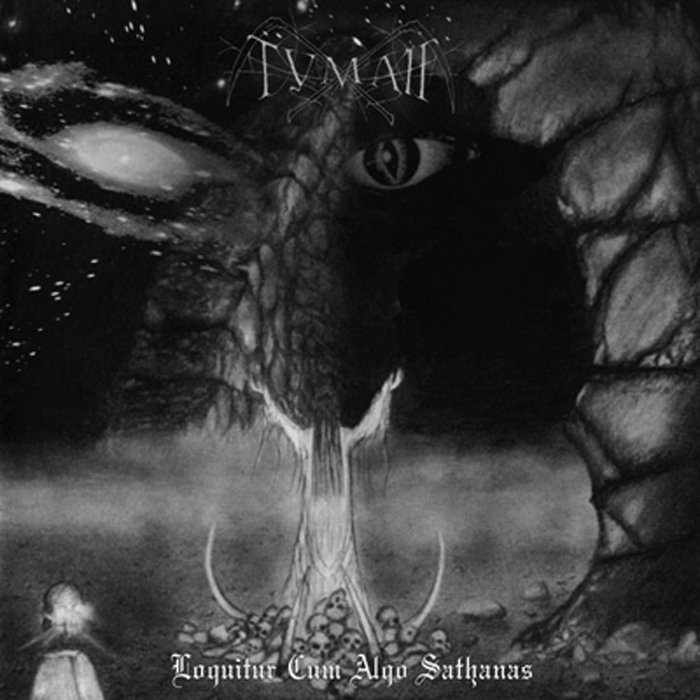
TYMAH - Loquitor Cum Alqo Sathanas (2007)
When "Transylvanian Dreams" came out, it could have been clear that by TYMAH something extraordinary showed up in the very tiny Hungarian underground scene. Their second full-lenght album just confirmed that expection.
But since the band did their best to isolate themselves from the local scene and it's audience, this act also didn't spark so much attention as it deserved. Their music showed remarkable progress all-round compared to the first album. Their themes kept their similarities to Mayhem, and mostly the intense drumms are reminding to Hellhammer's style. The sound became clear that makes easier to focus on the details of their fast and rageful play. The vocals are far more insane than before, inhuman screams completing the obscure atmosphere that only could be compared to what Bethlehem did on "Dictius Te Necare". The lyrical concept was uprgaded too. From the classic black metal topics that are seeking the dark forces in the hidden and mysterious regions of the mortal environment, they stepped forward into infinity. That switches between the incomprehensible world of the individual mind and it's dreams, and the cosmic level of evil that voyages during it's slumber in the unreachable distances of space. Of course the main features stayed the same, so by it's excellence "Loquitor Cum Alqo Sathanas" cannot disappoint the fans of old school styled black metal.
Tuesday, July 2, 2019
Blizzard - Les Litanies De Satan (2006)
By following the traditional Norwegian style of black metal, Blizzard debuted after a few demo records with "Les Litanies De Satan".
However modern influences also could be sensed on the album on the side of the old school blackness. Their music is more riff-centric than the old classics are, and the themes showing larger diversity. The album is also more melodic the same time, it's like trying to take place somewhere in the middle while drifting between various influences. The atmosphere has minimal role therefore, and occasionally deep growls assisting to the ordinary black cawing to turn the main impression more inhuman. So "Les Litanies De Satan" includes a little bit of everything and formed a whole from all. This counts definitely as the strong point of the album, because this mix wasn't against unified sound and serves as a genuine feature, an alternative aspect how the style developed further. The album could be enjoyable not only for the fans of traditional black metal, but also for those who prefer the more melodic or modern styles of the genre.
Monday, April 29, 2019
TYMAH - Transylvanian Dreams (2005)
By following strictly the traditional recipe of Norwegian black metal, TYMAH (or Tuman) debuted with "Transylvanian Dreams". Even though they've tried to create the exact Hungarian version of their preferred style and scene by copying it's features, they gave more to the tiny (and almost imaginary) local underground scene than just a simple concept album.
They were fascinated by the usual black metal topics, like the misty dark forests of Transylvania, and the evil supernatural forces that are lurking deep within. What could be more authentic than to hear about these topics by first hand from a Hungarian band on their own language? The strong influence of Mayhem and early Darkthrone could be heard in their music, that represents extraordinarily high quality in the local scene. This kind of old school black metal isn't common around and definitely fits on the side of the biggest classics. It's rare to hear female vocal in this style, but the insanely aggressive screams of Dim are more effective and convincing than how most might expect. The performance reminds to Onielar's from Darkenened Nocturn Slaughtercult. It can be sensed that the same person wrote the guitar themes and and did the vocals too, cause the two are in strong balance with each other. The drums gave excellent basics for intensity of the album, that probably counts as one of the most inhuman and obscure records of the genre. Strongly recommended for the fans of trve black metal!
Subscribe to:
Posts (Atom)